If you’ve invested time, money, and expertise into inventing something novel, you deserve more than mere protection—you deserve commercial value. Licensing or selling your patent is one powerful way to monetize your intellectual property and unlock revenue from your innovation. However, navigating this path requires strategic decisions, legal insight, and a clear understanding of your patent’s market value.
In this comprehensive guide, we break down the key steps, strategies, and best practices to help you confidently license or sell your patent—while maximizing return on your investment.
Understand What Patent Licensing and Selling Really Mean
Before you take any steps, it’s essential to understand the difference between licensing and selling:
Patent Licensing
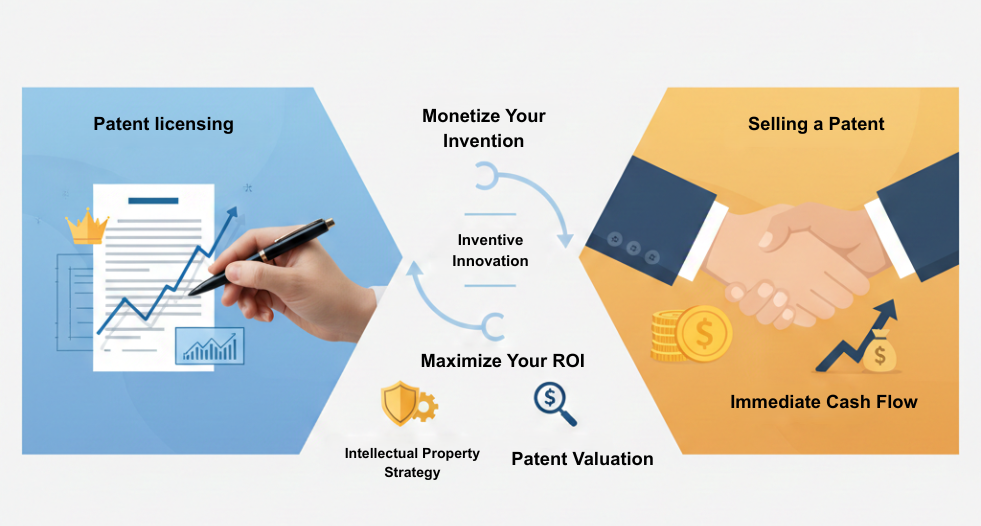
Licensing allows you to grant rights to a third party (a company or individual) to use, make, or sell your invention while you retain ownership. This means you can continue to hold the patent and earn ongoing revenue in the form of royalties.
Benefits of Licensing:
- Continuous income through royalties
- Opportunity to retain ownership
- Broader market reach with the help of licensees
Selling a Patent (Assignment)
Selling your patent means transferring full ownership to a buyer in exchange for a lump-sum payment or structured payouts. After transfer, you no longer have rights to enforce or benefit from that patent.
Benefits of Selling:
- Immediate cash inflow
- Less long-term management
- Useful if you lack resources to commercialize the technology
⚠️ Quick Tip: A strong patent with clear market potential typically attracts both licensing and sale opportunities—but you need the right positioning and strategy to monetize it effectively.
Assess Your Patent’s Value
Not all patents are equal. To attract serious buyers or licensees, you must evaluate your patent’s commercial viability:
Ask yourself:

✔ Does your patent cover a product or tech that solves a real market problem?
✔ Is there existing demand or potential growth for applications of the innovation?
✔ How broad are your patent claims—can they block competitors effectively?
Patent valuation is a crucial early step. This often requires technical assessment, market research, and legal review to determine your patent’s attractiveness to potential partners or buyers.
Prepare Your Patent for Licensing or Sale
To increase your chances of success, make sure your patent is “market ready”:
✔ Ensure all maintenance fees are paid and the patent is in force
✔ Strengthen documentation (claims, drawings, prosecution history)
✔ Gather market data showing commercial relevance
✔ Prepare a one-page pitch deck explaining value proposition
High-quality preparation signals credibility and increases trust with potential licensees or buyers.
Choosing the Right Strategy: License vs Sell
Your choice between licensing and selling will depend on your goals:
When to License:
- You want ongoing revenue
- You believe multiple companies can benefit
- You want to keep ownership and control
When to Sell:
- You need quick cash
- You don’t want long-term involvement
- A buyer offers compelling value upfront
It’s smart to consult with experts who can help you evaluate these options based on your business goals and market potential. This is especially true when evaluating royalty structures, exclusivity, and contract terms.
Find Potential Licensees or Buyers
There are several ways to find interested parties:
🔹 Industry contacts & trade shows
🔹 Patent brokers and licensing agents
🔹 Tech scouts at large companies
🔹 Online marketplaces and professional networks
Be cautious of scam brokers that ask for upfront fees—legitimate deals typically involve commissions or revenue shares rather than upfront charges.
Negotiate the Deal
A successful negotiation involves:
✔ Establishing a clear royalty model (e.g., fixed %, lump sum + running royalty, milestones)
✔ Deciding on exclusive vs non-exclusive rights
✔ Including termination clauses and performance obligations
✔ Protecting your confidential information
Experienced IP professionals can help draft robust agreements that protect your interests and maximize returns. (patentmyidea)

Get Legal and Strategic Support
To navigate legal complexities and optimize your monetization strategy, it’s wise to work with experienced patent agents and IP attorneys. Experts can help with:
- Patent valuation and landscaping
- Drafting licensing agreements
- Identifying potential partners or buyers
- Negotiation support
If you’re ready for expert guidance, visit our home page for comprehensive IP services designed to help you strategize, protect, and commercialize your patents.
Learn from Related Intellectual Property Insights
To deepen your understanding of patent commercialization and IP strategy, check out other detailed insights like Importance of Intellectual Property Rights for a Business. This blog explores how strong registration and IP management can enhance your patent’s commercial value and appeal to potential partners.
Ready to Take the Next Step?
Monetizing a patent—whether through licensing or sale—can significantly accelerate your innovation’s reach and revenue. But it takes careful planning, legal support, and targeted outreach.
👉 Need professional help to license or sell your patent?
Reach out to our expert patent team on the Contact Us page to discuss your invention and get personalized guidance.