Frequently Asked Questions
Find answers to top questions about Patentability Search, novelty evaluation, and the patent filing process.
What is "Patent Filing and Prosecution"? ▼
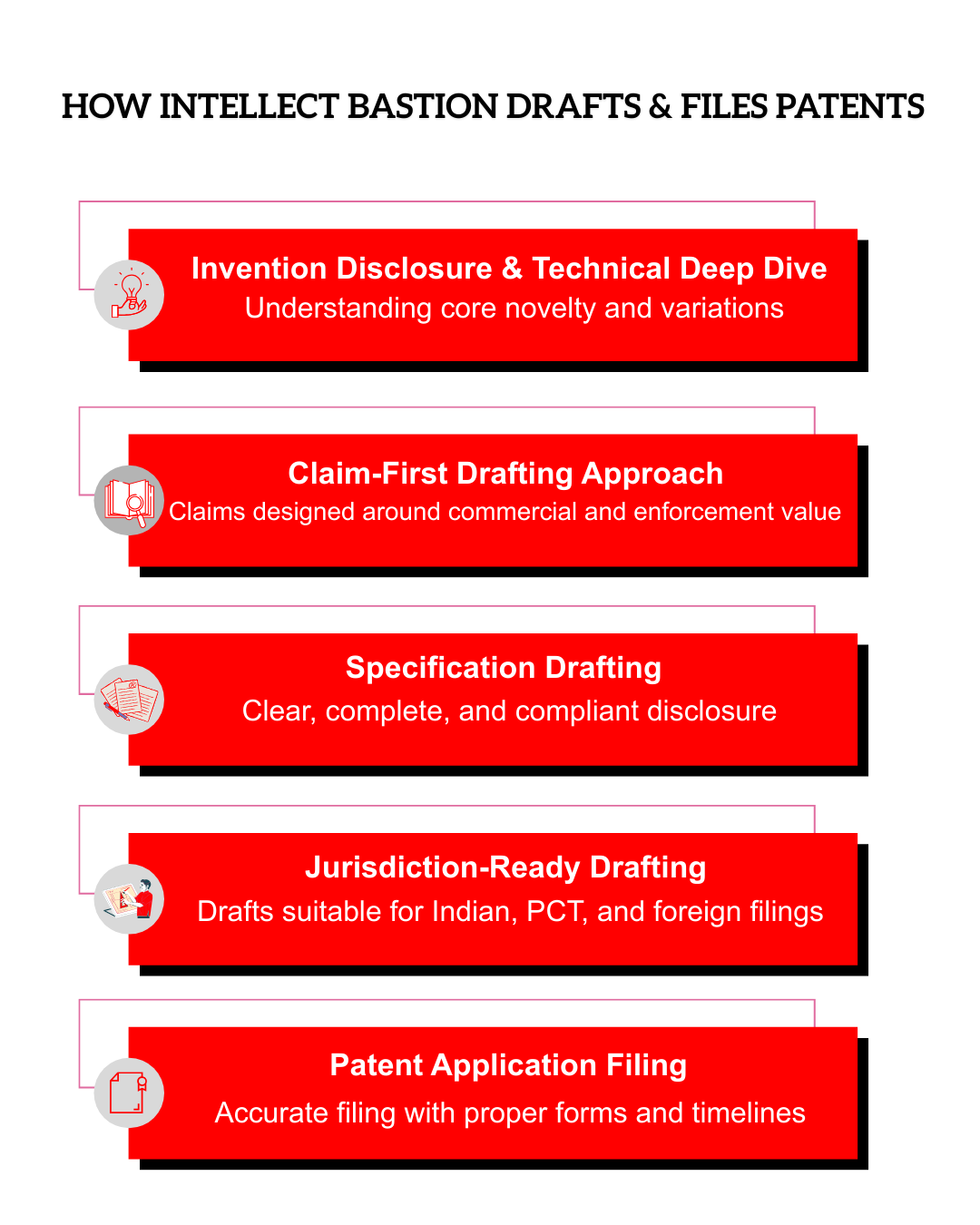
Patent filing is the act of submitting your invention application to a government patent office. Prosecution is the ongoing "negotiation" or dialogue between you (or your attorney) and the patent examiner to overcome objections and get the patent granted.
Why can’t I just write the patent application myself? ▼
While you can, patent drafting is a highly technical legal skill. A poorly written application can lead to a "weak" patent that is easily bypassed by competitors or rejected by the examiner. Professional support ensures your invention is protected broadly and legally.
What is a "Prior Art" search, and why is it necessary? ▼
Before filing, we search existing patents and public documents to see if your idea is truly new. This saves you money by identifying potential rejections before you invest in the expensive filing process.
What is the main business advantage of filing a patent? ▼
A patent gives you a legal monopoly for up to 20 years. It prevents competitors from making, using, or selling your invention, allowing you to maintain higher margins and a unique market position.
How long does it take to get a patent granted? ▼
The process typically takes 2 to 4 years, depending on the complexity of the technology and the backlog at the patent office. You can sometimes pay for "Prioritized Examination" to speed this up.
What happens if the Patent Examiner rejects my application? ▼
Rejections (called "Office Actions") are a standard part of the prosecution process. We respond by either clarifying the technical details, amending the "claims" to distinguish them from existing inventions, or arguing why the examiner's objection is incorrect.
Is my patent valid worldwide? No. Patents are territorial. ▼
A patent granted in the India, only protects you in the India. To protect your invention globally, you must file in each specific country or use an international system like the PCT (Patent Cooperation Treaty).
When should I file my patent? Ideally, before you publicly disclose it. ▼
In many countries, if you sell the product or talk about it at a conference before filing, you lose the right to patent it. The India has a one-year grace period, but filing early is always the safest strategy.
What are "Claims" in a patent document? ▼
The claims are the most important part of the patent. They define the legal boundaries of your protection. Think of them like a "property deed" for your idea—anything falling inside those claims is something others cannot do without your permission.
How much does the whole process cost? ▼
Costs vary based on the complexity of the tech and the number of countries involved. Expenses include professional drafting fees, government filing fees, and "maintenance fees" paid after the patent is granted to keep it active.