In the fast-paced world of innovation, timing is everything. Whether you are a startup founder with a disruptive app or an engineer with a groundbreaking hardware design, the question is always the same: “How long does the patent filing process take?”
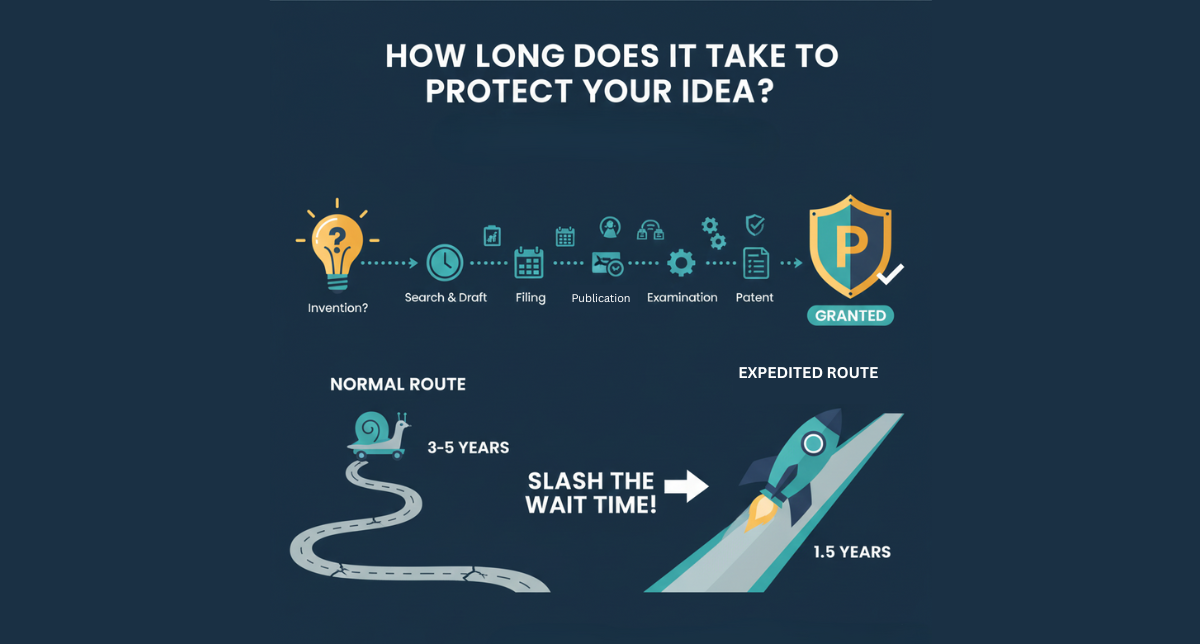
Securing a patent provides you with a legal monopoly over your invention, but the journey from “idea” to “granted patent” is a marathon, not a sprint. While the timeline has traditionally been 3 to 5 years, recent changes—especially in the patent registration process in India —have introduced ways to slash this time significantly.
In this guide, we break down the typical timelines, the stages involved, and how you can speed up your journey to patent pending status and final grant.
The Patent Filing Timeline: A Step-by-Step Breakdown
The duration of the patent process depends heavily on the route you choose (Normal vs. Expedited) and how quickly you respond to the patent office.
1. Preparation: Patentability Search & Drafting (2–4 Weeks)
Before you even file, you must ensure your invention is novel. A patentability search or prior art search typically takes 5–10 days. Once novelty is confirmed, patent drafting (writing the technical specifications and legal claims) takes another 2–3 weeks.
2. Filing the Application (1 Day)
Once the draft is ready, filing is instantaneous via the online portals of the Indian Patent Office (IPO) or the USPTO. At this stage, you receive a patent application number, granting you the coveted “patent pending” status.
3. Publication (1 Month to 18 Months)
By default, patent applications are kept secret for 18 months from the filing date before they are published in the official journal.
- Normal Route: 18 months.
- Strategic Tip: You can file a request for Early Publication (Form 9). This can get your application published within 1 month, allowing the examination process to start much sooner.
4. Request for Examination (RFE)
Your application will not be looked at by an examiner until you file an RFE.
- The New Rule (2025): For applications filed after March 2024, the deadline to file an RFE has been shortened from 48 months to 31 months.
5. Examination and First Examination Report (FER)
The examiner reviews your application to see if it meets the criteria of novelty, inventive step, and industrial applicability.
- Normal Route: It can take 12 to 24 months to receive the FER.
- Expedited Route: If you qualify, you can receive an FER in as little as 1 to 3 months.
6. Response to Objections (6–9 Months)
Once the FER is issued, you must respond to any objections. You have 6 months to file a response, with a possible extension of 3 months. The faster your patent attorney responds, the faster the grant.
Normal vs. Expedited Examination: Which One Should You Choose?
For many businesses, waiting 4 years for a patent is not an option. This is where Expedited Examination (Rule 24C) comes in.
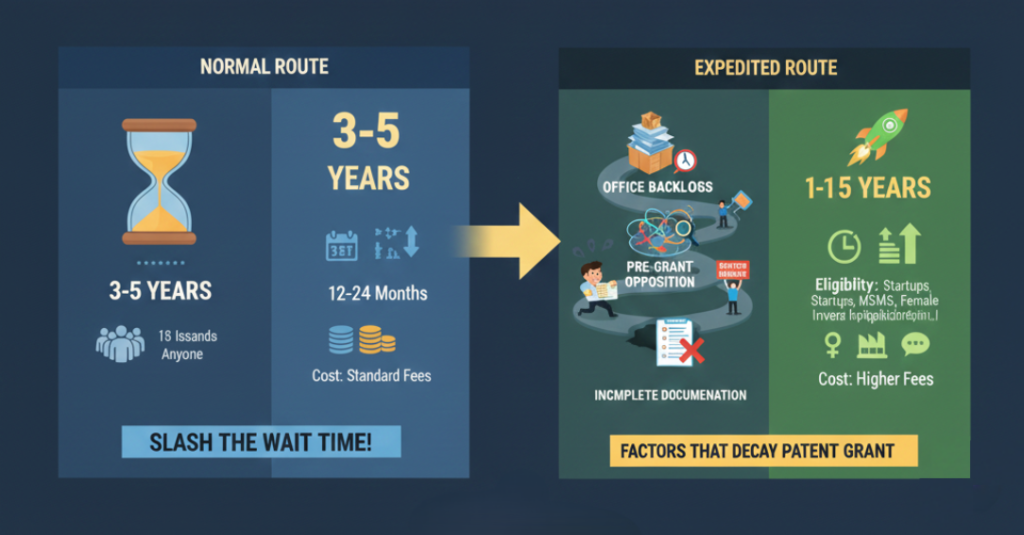
| Feature | Normal Examination | Expedited Examination |
|---|---|---|
| Average Grant Time | 3–5 Years | 1–1.5 Years |
| FER Issuance | 12–24 Months | 1–3 Months |
| Eligibility | Anyone | Startups, MSMEs, Female Inventors, Govt. Depts |
| Cost | Standard Fees | Higher Official Fees |
If you are looking to attract investors or block competitors quickly, the expedited route is the gold standard of intellectual property protection. At Intellect Bastion, we help eligible startups navigate these “fast-track” options to secure grants in record time.
Factors That Can Delay Your Patent Grant
While the law sets certain deadlines, external factors often influence the total duration:
- Office Backlogs: Certain technology sectors (like Biotech or Software) may have higher volumes of applications, leading to longer queues.
- Complexity of Claims: If your invention is highly technical, the examiner may issue multiple “office actions” or require a hearing via video conferencing to clarify the claims.
- Pre-grant Oppositions: Third parties can challenge your patent after publication but before the grant. This legal “hiccup” can add several months to the timeline.
- Incomplete Documentation: Missing a Power of Attorney or a certified translation of a priority document can halt the process entirely.

How to Speed Up Your Patent Process
- File an Early Publication Request: Don’t wait 18 months for the world to see your invention.
- Request Expedited Examination: If you are a startup or MSME, use this to jump the queue.
- Submit High-Quality Drafts: A well-drafted patent with clear claims reduces the number of objections in the FER.
- Respond Promptly: Don’t wait for the 6-month deadline. Responding to the examiner within weeks can shave months off the total time.
Conclusion
So, how long does the patent filing process take? In 2025, the answer ranges from one year (if you are proactive and eligible for expedited filing) to four years (under the normal route).
Navigating the complexities of patent prosecution, prior art searches, and FER responses requires expert guidance to ensure your intellectual property is not just filed, but granted.
If you’re ready to protect your innovation with a robust filing strategy, Contact us today for a consultation. Let’s turn your “patent pending” into a “patent granted.”