Frequently Asked Questions
Find answers to top questions about Patentability Search, novelty evaluation, and the patent filing process.
What exactly is "Patent Prosecution Support"? ▼
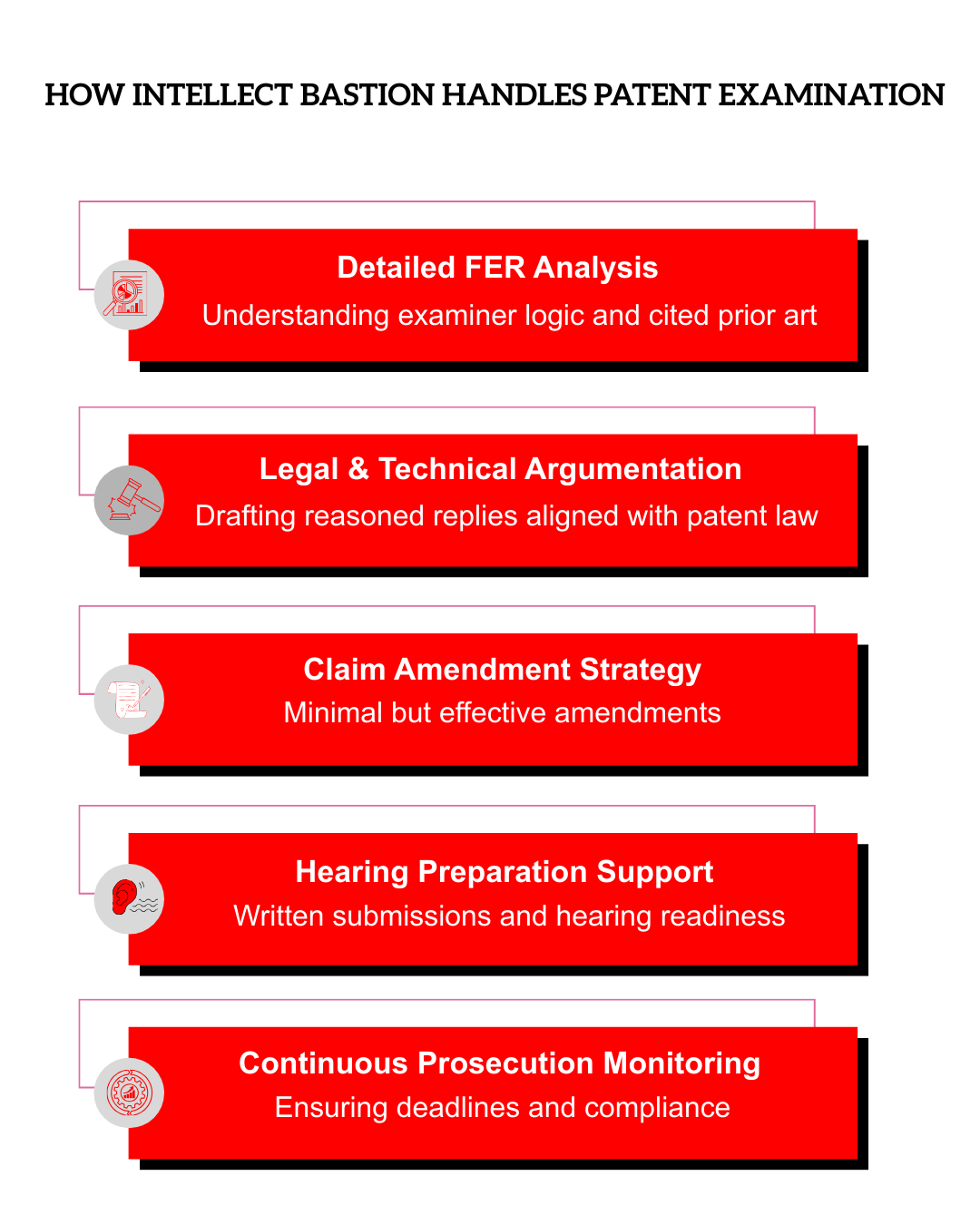
It is the process of managing your application after it has been filed. It involves responding to the patent examiner’s questions, attending interviews, and making technical arguments to ensure your patent is granted.
What is an "Office Action"? ▼
An Office Action is a formal letter from a Patent Examiner. It usually lists reasons why some or all of your "claims" (the legal definitions of your invention) are being rejected. It is a standard part of the process, not a final "no."
How do we respond to a rejection? ▼
We provide a written response. This involves either amending the claims to make them more specific or arguing that the examiner misunderstood your invention or the existing technology (prior art).
What is a "Patent Examiner Interview"? ▼
This is a meeting (usually via phone or video) between your representative and the examiner. These interviews are highly effective for clearing up misunderstandings and finding a "middle ground" to get the patent approved faster.
Why are there so many delays in the prosecution phase? ▼
Patent Offices handle millions of applications. It often takes 12–18 months to receive the first response, and several months between each follow-up. This is why "Prosecution Support" is necessary to keep the process moving.
Can I change my invention during prosecution? ▼
You cannot add "new matter" (new features) that wasn't in the original filing. However, you can refine how you describe and protect the features you already included to better navigate the examiner’s objections.
What is the role of "Technical Illustrations" in prosecution? ▼
Sometimes an examiner rejects an idea because they can't visualize how it works. Prosecution support often involves creating or refining technical drawings to prove that your invention is unique and functional.
How do I know when to give up on an application? ▼
A good support team will tell you if the examiner’s evidence is too strong. If the "claims" have to be narrowed so much that the patent becomes commercially useless, it may be better to stop and save on legal fees.
What happens once the prosecution is successful? ▼
The examiner issues a "Notice of Allowance." Once you pay the government’s issue fee, your patent is officially granted and your legal protection begins.