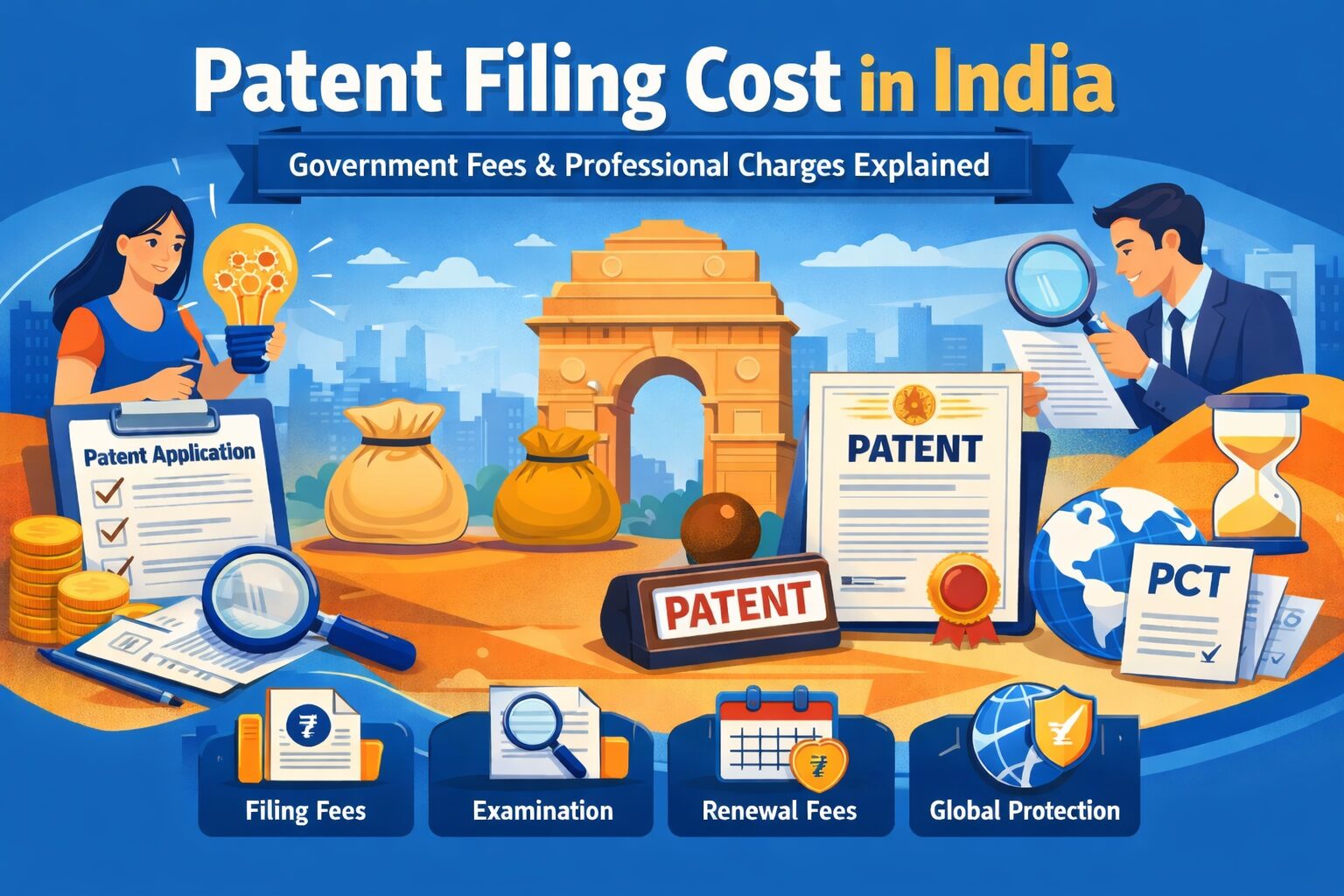
Navigating the patent registration process can be complex, especially when it comes to understanding the various costs involved. Whether you’re an individual inventor, a startup, or an established company, knowing the exact expenses for patent filing in India is crucial for budgeting and planning your intellectual property strategy.
This comprehensive guide breaks down all the costs associated with patent registration in India, including government fees, professional charges, and additional expenses you need to consider.
Understanding the Patent Filing Process in India
Before diving into costs, it’s essential to understand what you’re paying for. The patent registration process in India involves several key stages, each with its own fee structure.
What Are the Steps in the Patent Filing Process?
The patent filing journey in India typically follows these stages:
- Prior Art Search & Patentability Assessment – Determining if your invention is novel and non-obvious
- Patent Application Drafting – Creating detailed documentation including claims, specifications, and drawings
- Filing the Application – Submitting your application to the Indian Patent Office
- Publication – Your application is published 18 months after filing (can be expedited)
- Examination – A patent examiner reviews your application for patentability
- Responding to Objections – Addressing any concerns raised during examination
- Grant of Patent – Final approval and issuance of the patent certificate
- Annual Renewal – Maintaining your patent through periodic fees
How Long Does Patent Registration Take in India?
The timeline for patent registration in India varies significantly:
- Standard Process: 3-5 years from filing to grant
- Expedited Examination: 1-2 years (available for specific categories)
- Publication: 18 months from filing (or earlier if requested)
The duration depends on factors like application complexity, examination backlog, and whether you opt for expedited processing.
Government Fees for Patent Filing in India
The Indian Patent Office maintains different fee structures based on the applicant category. Understanding which category you fall under is crucial for accurate cost estimation.
Fee Categories: Who Pays What?
India’s patent fees are categorized into three applicant types:
- Individual/Natural Person – Lowest fee structure for individual inventors
- Small Entity – For startups and small businesses (as defined under MSME Act)
- Large Entity/Others – For established companies and organizations
This tiered structure is designed to encourage innovation among individuals and startups by reducing financial barriers.

Official Filing Fees
Here’s a breakdown of the primary government fees for online patent filing in India:
| S. No | Category | Fees in INR |
|---|---|---|
| 1. | Individual/Natural Person Small Entity (Startup) | 1,600 |
| 2. | Others (Large Entity) | 8,000 |
These fees cover the initial submission of your patent application to the Indian Patent Office.
Patent Publication and Examination Fees
Early Publication Request (Optional):
While publication happens automatically after 18 months, you can request early publication if you want faster processing. Note that you need to pay extra fees for early publication.
| S. No | Category | Fees in INR |
|---|---|---|
| 1. | Individual/Natural Person Small Entity (Startup) | 2,500 |
| 2. | Others (Large Entity) | 12,500 |
Request for Examination:
This is a mandatory fee that must be paid within 31 months of filing for your application to be examined. Without this request, your application will be deemed abandoned.
| S. No | Category | Fees in INR |
|---|---|---|
| 1. | Individual/Natural Person Small Entity (Startup) | 4,000 |
| 2. | Others (Large Entity) | 20,000 |
Expedited Examination Fees
For those who need faster processing, the Indian Patent Office offers expedited examination:
Expedited Examination Fees:
| S. No | Category | Fees in INR |
|---|---|---|
| 1. | Individual/Natural Person small Entity (Startup) | 8,000 |
| 2. | Others (Large Entity) | 60,000 |
Expedited examination is available for:

- Startups and Small Entities
- Applications filed by a department of the Government
- If the applicant is a natural person or in case of joint applicants, all the applicant are natural persons, then the applicant or at least one applicant is a female.
- If the application pertains to a sector which is notified by the Central Government on the basis of a request from the head of a department of the Central Government.
- Applicants who have filed corresponding applications abroad and wish to expedite examination in India
Patent Renewal and Maintenance Fees
Once your patent is granted, the protection doesn’t end there. To keep your patent active and enforceable for its full 20-year term, you must pay annual renewal fees to the Indian Patent Office. These fees are mandatory and failure to pay them can result in the lapse of your patent rights.
| Patent Year | Period Covered | Natural Person / Startup / Small Entity (INR) | Large Entity / Others (INR) |
|---|---|---|---|
| Year 1 - 2 | Initial Year | No Fee | No Fee |
| Year 3 - 6 | 3rd – 6th Years | 800 | 4,000 |
| Year 7 - 10 | 7th – 10th Year | 2,400 | 12,000 |
| Year 10 - 15 | 10th – 15th Year | 4,800 | 24,000 |
| Year 15 - 20 | 15th – 20th Year | 8,000 | 40,000 |
Professional Charges for Patent Services in India
While government fees are standardized, professional charges vary based on the complexity of your invention, the experience of the patent professional, and the scope of services required.
Patentability Search Costs
Before filing a patent, conducting a thorough prior art search is highly recommended:
Patentability Search Fees: ₹5,000 - ₹15,000
This service includes:
- Comprehensive database searches across Indian and international patent databases
- Analysis of existing patents and published literature
- Patentability opinion report
- Assessment of novelty and inventive step
A quality patentability search can save you significant money by identifying potential obstacles before you invest in the full filing process.
Patent Drafting Charges
Patent drafting is perhaps the most critical—and expensive—professional service:
Patent Application Drafting: ₹35,000 - ₹65,000
This cost typically covers:
- Complete specification preparation
- Claims drafting (independent and dependent claims)
- Technical drawings and diagrams
- Abstract and background description
- Detailed description of the invention
The variation in cost depends on:
- Technical complexity of the invention
- Number of claims required
- Industry sector (pharmaceutical and biotechnology patents typically cost more)
- Experience and reputation of the patent agent
Patent Filing in India vs. International PCT Filing
Many innovators wonder whether to file in India alone or pursue international protection through the Patent Cooperation Treaty (PCT).
When to Choose PCT?
Consider PCT filing if:
- You plan to commercialise your invention internationally
- You’re seeking foreign investment or partnerships
- Your market extends beyond India
Cost of Extending Indian Patent to PCT National Phase
If you’ve filed an Indian patent and later decide to seek international protection, you must file a PCT application within 12 months (one year) from your Indian filing date to claim priority. This one-year window is critical and cannot be extended, so timely planning is essential.
PCT National Phase Entry Costs: ₹40,000 - ₹60,000 (Professional Fees)
For Government fees please refer this document.
Keep in mind that PCT national phase entry must be completed within 30-31 months from the priority date (your Indian filing date).
Note – For individual innovators, this 90% discount transforms international patent protection from an unaffordable luxury into a realistic possibility. You can secure priority dates in multiple countries simultaneously while maintaining the flexibility to decide later which specific countries to enter based on your commercialisation strategy and funding availability.
Strategies to Minimize Patent Costs
1. Choose the Right Applicant Category
Ensure you’re correctly classified. Startups should obtain DPIIT and Small Entity obtain MSME recognition to qualify for reduced fees and expedited examination.
2. Invest in Quality Prior Art Searches
A thorough patentability search can prevent wasted investment in non-patentable inventions.
3. Consider Provisional Applications
File a provisional application first to secure your priority date while you refine your invention. You have 12 months to file the complete specification.
4. Plan Your International Strategy
Don’t rush into PCT filing. Evaluate your market potential and file in countries where you’ll actually commercialize or license your invention.
5. Work with Experienced Patent Professionals
While it might seem cost-effective to use cheaper services, poorly drafted patents can lead to rejection, costly amendments, or weak protection. Quality professional guidance is an investment, not an expense.
Conclusion: Is Patent Filing Worth the Investment?
While patent filing in India requires a significant investment when accounting for both government fees and professional charges, the value of patent protection far exceeds the cost for innovations with commercial potential.
Patents provide:
- 20 years of exclusive market rights
- Competitive advantage and market differentiation
- Licensing revenue opportunities
- Increased company valuation for fundraising
- Legal recourse against infringement
For businesses and innovators, patents are not just legal documents—they’re strategic business assets. Understanding the complete cost structure helps you make informed decisions about protecting your intellectual property.
Whether you’re an individual inventor with a breakthrough idea, a startup developing innovative solutions, or an established company expanding your IP portfolio, investing in proper patent protection is essential for long-term success.
Ready to protect your innovation? At Intellect Bastion, we provide comprehensive patent services tailored to your budget and business goals. Our experienced patent professionals guide you through every step of the patent registration process, ensuring your intellectual property receives the strongest possible protection.