Trademark registration is a major achievement for any organization because it ensures your brand name is safe from your competitors. The problem is that most entrepreneurs wrongly assume that trademark registration gives them eternal ownership without any extra effort from their side. On the contrary, intellectual property system follows the “use it or lose it” policy.
If you stop using your brand or just ignore it for a certain period of time, competitors will be able to challenge your right to it. It is essential to know all the details concerning the process of removing trademarks for non-use in order to preserve your intellectual property.
Understanding the "Use It or Lose It" Trademark Law
The basic role of a trademark is to distinguish the source of origin of the goods or services provided by a business entity to the consumer. Therefore, legal frameworks around the world prohibit the filing of trademarks that are not being used by the organizations that file for registration. This is the basic premise behind the use it or lose it principle of trademark law, which ensures that companies are prevented from stopping other organizations from using good trademark names.
In case a trademark is not being used at all, then it will just occupy space in the register and prevent genuine companies from entering into the market. Therefore, legal provisions have been made so that third parties can seek to cancel the trademark for non-use of the same.
- Registry Management: A clean registry ensures that active companies have access to unique and functional names.
- Protection of Consumers: Active trademarks allow consumers to know which products are genuine in the market.
- Limiting Monopolies: The law prevents individuals or organizations from hoarding a large number of words without any intention of doing business.
Is a Trademark Liable for Removal if Not Used?
The quick answer is yes; the mark is very easy to be revoked by the authorities should it be totally abandoned. The laws were made in such a way that only active marks would appear in the register and not the hypothetical ones. So, anyone can start legal action against you and remove your registration as long as you do not have commercial activity.
Knowing the reasons for which your mark may be removed from the registry due to non-use is essential to understand your level of risk. As a rule, the party needs to prove either a lack of intention to use the mark when applying for registration or a period of non-use. Should you fail to demonstrate commercial activity during that period, your mark will be removed.
- Bona Fide Intention: A mark can be removed if it was registered without a bona fide intention to use it and there has been no genuine use up to three months prior to the date of the removal application.
- Non-Intent: Registering a brand name to hinder competition in its business activities when it does not have actual intentions to proceed is considered bad faith.
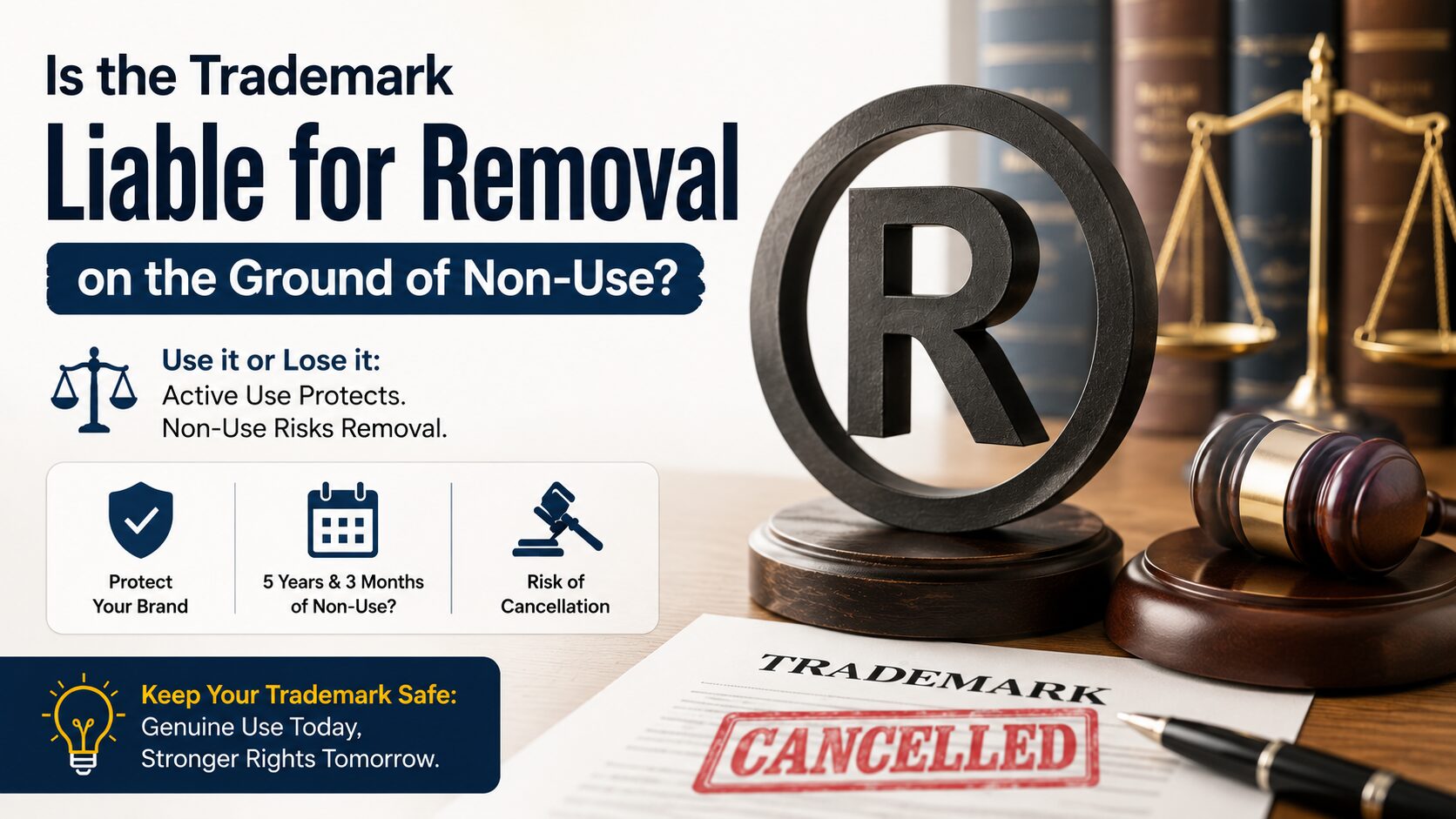
- Persistent Non-Use: A mark is liable for removal if there has been continuous non-use for a period of five years and three months or longer, calculated from the date the trademark was officially entered into the register.
- Some Categories Removed: In case one uses the mark for footwear and not for the registered category of watches, the court strips some categories.
How Long Can a Trademark Be Unused Before Cancellation?
The period for abandonment will vary by jurisdiction, but generally, the time frame set is usually between three and five years. In the Indian and US jurisdictions, for instance, it takes five years and three months of non-utilization for a third party to be able to initiate a cancellation of the mark. Also, the counting of time starts on the day the mark gets registered and not when the application was filed.
It becomes very important for companies to know exactly the period of non-utilization for trademarks in order to create a safe roadmap of product launches. In case of any delay in the launch of your product, you have to make sure that this statutory time frame does not catch up on you to avoid any loss.
- Five Years Rule: Almost all the significant systems have provisions for filing of cancellation petitions on account of non-use after five years and three months of continuous non-use.
- Grace Period: Brands that have just been registered enjoy a grace period before any challenge is made.
- Period Continual: The businesses need to start calculation of the period right from the registration date.
What is Considered Genuine Use of a Trademark?
In order to withstand a legal action against his company, the owner needs to prove not just occasional and negligible activity but that of the type called “genuine use” by the legal system – actual and commercial utilization targeted at consumers. Therefore, it would not suffice for the firm to merely manufacture one t-shirt for a friend to show active involvement in operating a fashion label.

Judicial authorities will consider genuine use of the trademark to include regular business operations in the market. Usage should be continuous, open, and intended for building a market presence in respect of particular goods/services. Moreover, the scope of usage should be appropriate to the nature of your industry.
- Intent of Commerce: There should be transactions taking place in the regular course of business for the purpose of making a profit, rather than just maintaining the registration.
- Visibility in Public Eye: The general public should have easy access to the branded items through the regular market channels.
- Adequate Quantity: Though large sales quantities are not always required, yet the distribution should be genuine and consistent.
How to Remove a Registered Trademark from the Register
If you are a businessman facing hindrances due to a defunct brand name, then there are certain actions which you can undertake legally to make your way easier. You need to apply for a rectification or cancellation of the trademark at the trademark tribunal or registry concerned. But you have to be sure that you are an “aggrieved person,” which means that the present registration affects your interests in business.
It is imperative to know how to cancel a registered trademark from the register through an appropriate plan, along with foundational research. Initially, your lawyer needs to collect evidence about the abandonment of the target brand. Once you acquire the basis, you can file a petition based on the trademark cancellation non-use grounds accepted by your government.
- Filing of a Rectification: Petitioner files an application giving details about the non-use period to the registry/court
- Establishing Standing: It is mandatory for the claimant to show evidence to show how the existing mark is restricting their business growth/applying for registration.
- Evaluation: The Tribunal examines the market history of the disputed mark prior to making a decision.
Valid Defences Against Non-Use Trademark Removal
Luckily, the law acknowledges the possibility of external elements affecting any business plan. In case of a challenge from a competing firm against your trademark, there are ways in which one may defend themselves legally. For instance, in the case of a restriction or embargo placed on your company by the government, the court is sure to consider these elements.
To win the petition for removal of the trademark due to non-use, you will need to show that there were external forces which caused such an abandonment. Failure and loss of motivation cannot work in court in this particular situation. You will have to demonstrate your intention to resume business once the restrictions are lifted.
- Exceptional Circumstances: Trade limitations, import prohibitions, or industry regulations that suddenly come into effect can be an official exception for not using the mark.
- Proof of Intention to Use: A plan of business, production prototypes, or shipping contracts prove that you did not intend to give up on your mark.
- Succeeding Against the Petitioner: If you successfully demonstrate legal impediments, then the court will dismiss the case.
Defending Your Brand Assets from Removal

In order to keep your trademark protected, you have to maintain constant vigilance and ongoing commercial usage. Failing to do so amounts to waving a red flag to competitors who are eager to rip away your precious trademarks. Hence, you need to regularly audit your registered intellectual property internally to make sure that each mark corresponds to a product that is actually being used.
If you find an inactive mark, you can either run a targeted marketing campaign or reconfigure your products in order to create real use of the mark. Otherwise, in case there is an aggressive non-use proceeding, you may want to contact an intellectual property lawyer. Your security needs to be no mystery, so let Intellect Bastion take charge and ensure that your trademarks are completely protected from rival firms!
Frequently Asked Questions
For how long may a trademark not be used until it is cancelled?
A trademark may be allowed to lie dormant for up to five years and three months from the official registration period without being open to cancellation. In some nations, however, a trademark cannot remain dormant for more than three years.
Can the trademark be stripped away if the owner attempts to sell the trademark but does not use it?
Yes, merely attempting to sell the trademark or license it is not considered commercial use. If the trademark is not used on any products or services available to the public, then it is wholly subject to being stripped away.
What are the legal defences to non-use cancellation of trademarks?
The owner can raise a defence when he/she can show “special circumstances of the trade,” for example, government restrictions on imports or market disasters, that led to non-use of the mark. This is not due to any abandonment of the mark but because of the force majeure.
Is advertising of the mark by way of brand promotion considered “use” of the trademark when the item is not yet in the stores?
Advertising before the actual launch can be useful at times to establish an intent to use, but it does not constitute true commercial use by itself. In order to receive maximum protection, you need to put your goods or services into commerce.
What is the statute of grace that is provided before the new trademark can be opposed on the grounds of non-use?
Most jurisdictions provide their trademark owners a statutory period of five years and three months from the date of registration. During this period, no cancellation application can be filed on the sole ground of non-use.
Whose is the burden of proof in the case of removal of a trademark on account of non-use—the petitioner or the trademark holder?
At first, the burden is that of the petitioner who will have to show a prima facie case of non-use of the mark during the statutory period. After that, the entire burden falls on the trademark holder.
Can a trademark be declared invalid for lack of use if it was being used only in a particular city or particular state but not nationally?
Localized use in a single city or particular state may be sufficient to thwart non-use cancellation of the mark, as long as it was real and commercial use. Restricted geographic use may result in a situation where concurrent use agreement applies in some countries.
Is the five years and three months non-use period based on the date the trademark application was filed or the date the mark is registered?
The five years and three months non-use period is calculated only by the date the mark was registered. It is important to note that the period of time the application has taken to be processed will not count towards your non-use period.
What forms of documentary evidence are necessary to establish that the trademark is in use?
For establishing active use, it is recommended to produce invoices from commercial transactions, transportation bills, pictures of product packing, purchase receipts, and website analytical information. In addition to that, promotional brochures and sales income are a good proof.
If an enterprise uses its trademark on totally different categories of products compared to those on which it was registered, will there be any possibility for the previous registration to be removed?
The previous registration becomes highly vulnerable for partial removal from the point of view of the categories of products that were left unused by you. Only then can trademarks be protected for their actual trading categories.
Is a "token sale" made in low volumes to an associate sufficient to qualify as actual use that can counter an application for non-use?
No, no modern court would accept token use for maintaining a trademark registration when the sole purpose of the sale is just to maintain the trademark registration.